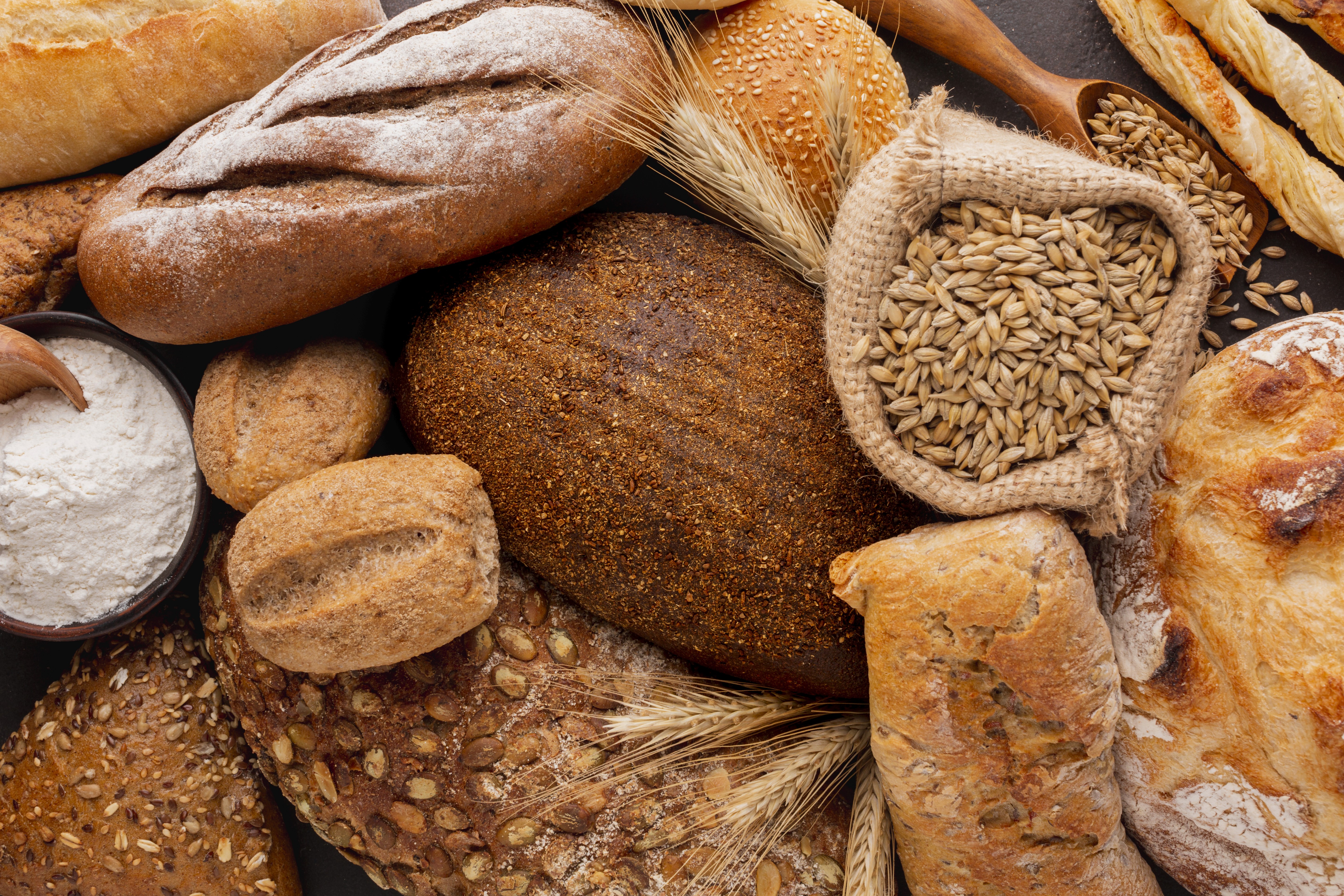
What is bread?
Bread is made up of 4 key components this is more about bread that rises).
Flour
Water
Yeast
Salt
Flour
Flour is the structure. which are made from glutenin (strength) and gliadin (stretch). When you add water and mix, the protein hydrates, and link together and make gluten, This creates a viscoelastic network. Think of net that can stretch, this net helps trap gas.
Strong gluten network -> Chewy Bread ( Bagels)
Weak Gluten -> Soft bread (Brioche)
Water
Water is the kickstarter, and it does a whole bunch of things like:
hydrates the protein
dissolve salt + sugar
activate yeast
allows enzymes to work
Hydration Levels
Higher Hydration Levels | Lower Hydration Levels |
|---|---|
More open crumb | Tghter crumb |
More extensibility | Easier handling |
Sticker Dough | Denser bread |
Yeast
Yeast eats sugar and produces gas (CO2 + alcohol) which helps the bread rise! This process is called fermentation, which helps create flavor, aroma, and better texture. A longer fermentation = deeper flavor.
Salt
Salt is small but mighty, it control everything.
strengthen gluten
slows yeast
improve flavor
Without salt, dough is sticky, rises too fast, and taste bland. So yes, that pinch of salt really does matter!
Kneading
Kneading is needed activate water with all the other ingredients.
Kneading aligns gluten, strengthen structure, and creates elasticity which allows the dough to trap gas and expand without tearing.
Fermentation Stages
Bread usually ferments twice:
Bulk Fermentation (First Rise)
yeast produce gas
gluten relaxes
flavor develops
Which the dough becomes airy and extensible
Proofing (Second Rise)
After shaping:
dough rises again
structure is refine
This is what determines the final shape and crumb.
The Oven Spring
This is most important part! When the dough his the oven:
Gas Expands
Yeast Burst
Steam Forms (adds major lifts)
Gluten Sets (Structure is locked in)
Starch Gelatinization (Starch absorb water and it thickens, which gives bread its crumb).
Crust Formation
When the crust form, the surface dries out and traps whatever moisture is inside. The flavor and brown crust is created by Maillard reaction + caramelization happens.
What are all those holes in the bread?
Air pockets, from the trapped gas, fermentation, and dough handling.
Small holes = less hydration, more mixing, tighter structure (think of a cake :)
Big holes = higher hydration, gentle handling, strong gluten